The seminar
The topic of gender justice must begin with the inevitable question: what gender is justice? Linda R. Hirshman asks, “Is the law male?” Hirshman’s question points out how the “maleness” of the legal system affects every woman.
Dr. Pan’s lecture will focus on gender justice through the lens of intersectionality to emphasize the necessity of recognizing the interconnectedness as well as differences among categories. Intersectionality challenges traditional notions of justice that treat social categories as separate or distinct.
Instead, it calls for an approach to justice that acknowledges how various systems of oppression (e.g., sexism, casteism, classism) intersect and compound one another. Achieving gender justice, therefore, requires addressing these interconnected forms of oppression holistically.
About the speaker
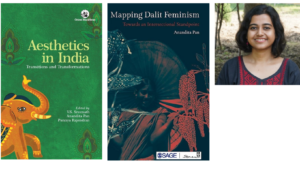
Dr. Anandita Pan is an Assistant Professor in the Department of Liberal Arts, IIT Hyderabad. Her areas of interest are Feminist theory, Gender Studies, and Dalit Feminism. She is the author of Mapping Dalit Feminism: Towards An Intersectional Standpoint (Sage-Stree, 2020) and Aesthetics in India: Transitions and Transformations (Orient Blackswan, 2023). She is the recipient of the President’s Award for Best paper at the IAWS conference, 2020.
9 December 2024
12h00 – 13h30
Join us in person
Ghent University – Campus Tweekerken
Room 1.10
Sint-Pietersplein 7 – 9000 Ghent
Register and attend online
Click here to register and join on Microsoft Teams
Organised by
SANGH – South Asia Network Ghent
CRCG – Center for Research on Culture and Gender
Contact: Hannah.VandenBroucke@UGent.be



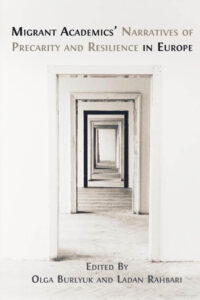 Migrant Academics’ Narratives of Precarity and Resilience in Europe
 About the lunch seminar
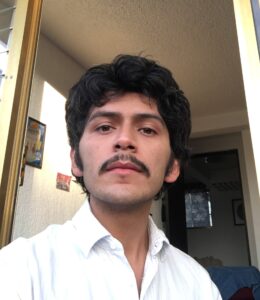 During this lunch seminar Manuel will present some of his advances on research about the relation of his family with spiritual practices from mesoamerican tradition as a point of inquiry from autoethnography and affective ethnography. Since the articulation of the methodology required a necessary ethical reflection, his starting point on the relationship with family members and himself for the research has been one of its main axes along the project. At the same time, the inquiry into his family history opened the way to understand his own situated relations to the colonization process that many people have gone through in his country. From this perspective, his actual focus is to understand the relation between coloniality, the effects of policies of mestizaje, the potentiality of spirituality, and the way in which his family keep certain vitality of the Mesoamerican tradition even when they as farmers, are not part of any indigenous group.